Why Professional Chefs Never Bake Without Parchment Paper: Kitchen Secrets
Published on: 2026-01-07
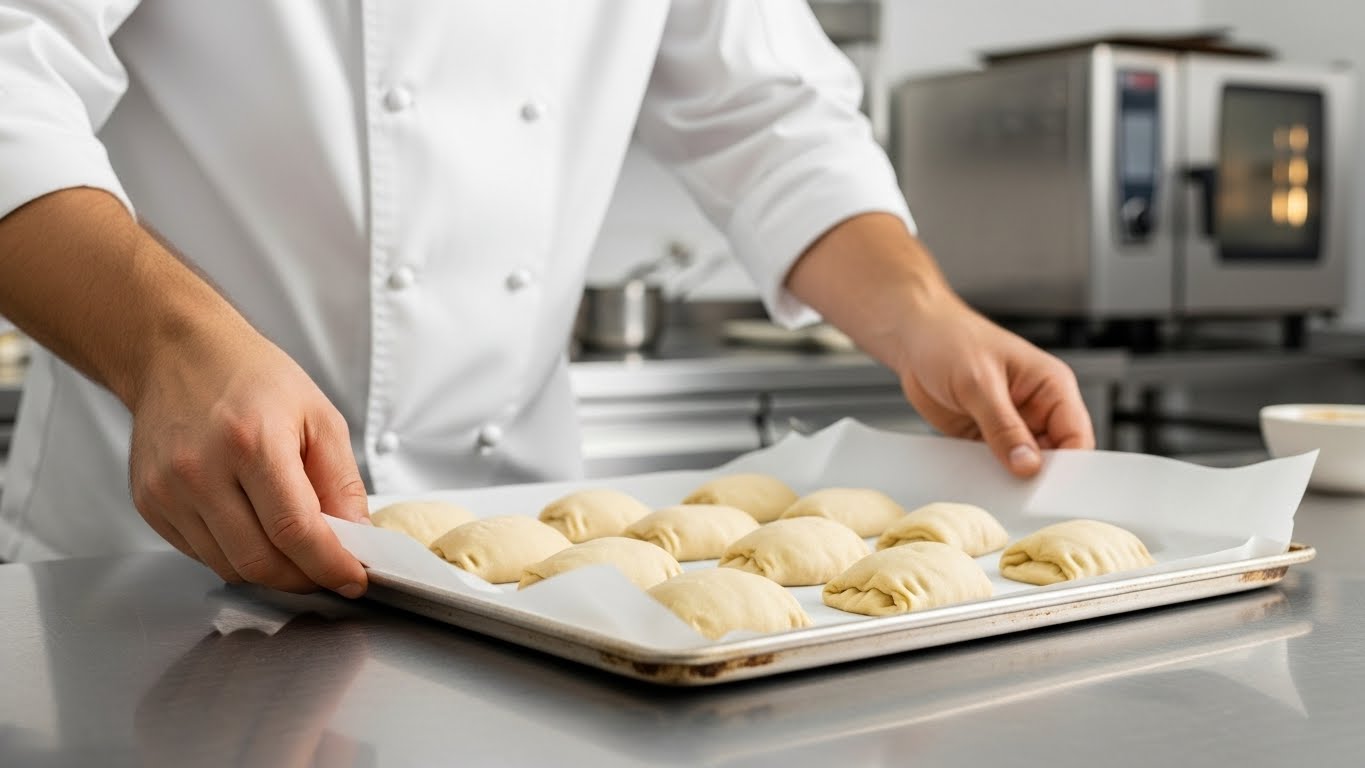
Have you ever wondered why parchment paper is a non-negotiable tool in professional kitchens? I've spent years working alongside top chefs and can tell you this cellulose-based paper is considered essential for good reason.
Parchment paper is specifically designed to be non-stick, grease-resistant, moisture-resistant, and capable of withstanding temperatures up to 450°F (232°C). Additionally, most brands are oven-safe up to 420°F (216°C), making it perfect for nearly all baking applications. We rely on this versatile kitchen helper daily, though occasionally we need a parchment paper substitute when supplies run low.
In this article, I'll share professional insights about why parchment paper transforms baking results, advanced techniques for using it beyond the basics, and what alternatives work best when you find yourself reaching for an empty roll. These are the kitchen secrets that separate consistent, stress-free baking from frustrating, unpredictable results.
Inside the Mind of a Professional Chef
Professional kitchens operate on precision and efficiency. I've witnessed firsthand how top chefs approach their craft with systematic thinking rather than just creative flair.
Why consistency matters in baking
For professional bakers, consistency isn't just nice to have it's everything. Successful baking demands repeatable results, which depend heavily on ingredient consistency and dough production uniformity. In professional kitchens, we know that without consistency at these fundamental stages, creating reliable quality becomes nearly impossible.
Professional bakers don't rely on memory or intuition alone. Instead, we build systems prep lists, simplified recipe cards, weights, times, and clear workflows that eliminate variables. Furthermore, every professional weighs ingredients rather than using volume measurements, ensuring accuracy down to the gram.
The elements that professional bakers monitor meticulously include:
- Mixing times and temperatures
- Sheeting and molding processes
- Precise oven temperatures
- Cooling procedures
Each of these factors can dramatically impact the final product's quality.
How parchment paper reduces kitchen stress
Cooking can be chaotic, but parchment paper brings order to the process. Essentially, it acts as a stress reducer in professional kitchens by eliminating several common frustrations.
The non-stick surface minimizes the need for extra oil or butter while significantly simplifying cleanup. Moreover, the silicone treatment ensures that even the stickiest, sugar-rich doughs release cleanly, protecting delicate baked goods from breaking.
In reality, this translates to fewer failed bakes and ruined products. Consequently, I can focus on technique and creativity instead of worrying about sticking issues or inconsistent results.
The role of prep and cleanup in high-volume kitchens
In busy professional environments, time equals money. A single morning shift in a busy bakery can go through several rolls of parchment paper. Primarily, this is because every minute spent scrubbing pans is time lost from production.
Professional kitchens value "mise en place" a French term meaning "everything in its place". This preparation philosophy ensures organization and prevents frantic last-minute searching for ingredients or equipment.
Parchment paper plays a crucial role in this system. It lines trays, separates dough pieces, and catches drips, keeping workstations cleaner between batches. By enabling faster batch turnover with minimal cleaning, it allows kitchen teams to maintain momentum during high-volume service periods.
Kitchen Secrets: How Parchment Paper Enhances Baking
The magic of parchment paper lies in its ability to transform ordinary baking into professional-level results. After years working in busy kitchens, I've seen firsthand how this simple tool makes a remarkable difference.
Even browning and no sticking
Parchment paper creates a thin air layer between your baking sheet and the food, which helps regulate temperature and neutralize hot spots. This barrier effect is particularly valuable when baking delicate items that could easily over-brown. Primarily, parchment paper prevents your baked goods from developing a thick, dark crust that might detract from the lightness of the crumb inside.
The silicone coating on parchment paper makes it naturally non-stick, serving as a guardian against the dreaded scenario of stuck-on cookies or delicate pastries. This non-stick property ensures the preservation of your meticulous efforts and simplifies the extraction process.
Faster batch turnover with less mess
For high-volume baking, parchment paper is invaluable. You can reuse sheets up to three times when baking cookies, maximizing efficiency. As one baker noted, "The clean up is a snap every time" - simply remove the parchment after baking, and your pan is clean!
This ease of cleanup extends the life of your baking sheets as well. With no burned bits sticking to your trays, your nice baking sheets will last considerably longer.
Better texture in cookies and pastries
Modern parchment papers are engineered with specific porosity that allows controlled moisture release during baking. This technical feature helps achieve the perfect texture crisp exteriors with properly cooked, moist interiors.
For cookies specifically, parchment gives the dough something to hold on to, creating fuller cookies that don't spread too much. When cookies are thicker, they tend to be softer in the middle as well.
Perfect cake release every time
Ask any professional baker about their cake-making secret, and parchment will likely top the list. Lining cake pans with parchment paper is the trick used by professionals every time. After extensive testing of a dozen different options, the winner was conclusively parchment plus nonstick pan spray.
The results speak for themselves - your cake will drop right out of the upended pan onto its cooling rack, and the parchment peels easily off the warm cake's bottom. As one baker puts it, "Once you go with parchment, you'll never go back to just plain grease and flour".
Creative and Advanced Uses You Might Not Know
Beyond its basic baking applications, parchment paper offers creative possibilities that many home cooks haven't discovered yet. These professional techniques can elevate your cooking dramatically.
Using parchment for blind baking
Blind baking pre-baking an empty pie crust prevents soggy bottoms in custard pies. Parchment paper is essential here: line your unbaked crust with parchment, then add weights to prevent the crust from bubbling or sinking. Unlike foil, parchment won't stick to your delicate pastry, making weight removal effortless.
Making chocolate decorations with piping cones
Chocolate decorations instantly upgrade desserts. Simply melt chocolate, pour it into a piping bag, then pipe designs onto parchment paper. After hardening for about an hour, these decorations peel off easily. For precision work, try placing a template under the parchment to trace. Alternatively, create a DIY pastry bag by rolling parchment into a cone shape perfect for detailed work.
Shaping dough and rolling without sticking
Kneading dough becomes hassle-free with parchment paper. Sprinkle flour on parchment to create a non-stick work surface that simplifies cleanup. For perfect pizza or cookie dough, place the dough between two parchment sheets before rolling this prevents sticking to both counter and rolling pin.
Cooking fish and chicken in parchment pouches
"En papillote" (parchment pouch cooking) creates supremely moist results. Place protein and vegetables on parchment, season well, then fold and crimp the edges tightly. This method steams ingredients in their own juices, requiring minimal added fat. Since everything cooks in one packet, cleanup is virtually nonexistent ideal for weeknight cooking.
What to Do When You Run Out: Smart Substitutes
Running out of parchment paper mid-recipe doesn't have to derail your baking plans. Professional kitchens always have backup options ready for this common predicament.
When foil can work in a pinch
Aluminum foil handles high temperatures admirably up to 1,220°F making it suitable for most baking tasks. However, foil lacks the non-stick properties of parchment paper. To compensate, always coat foil with cooking spray or butter. Be aware that cookies baked on foil typically develop darker, crispier edges compared to those baked on parchment.
Greasing pans the right way
For optimal results, use solid vegetable shortening or butter rather than liquid oils. Apply a thin, even coating using a pastry brush or paper towel. Subsequently, dust the greased surface with flour, rotate the pan to ensure complete coverage, then tap out excess. This method creates two protective layers against sticking and produces clean release.
Using silicone baking mats
Silicone baking mats offer a reusable alternative that can withstand temperatures between 480°F and 500°F. Initially expensive, these mats eventually pay for themselves through repeated use. Indeed, they work wonderfully for cookies requiring spread, such as tuiles and florentines. Nevertheless, silicone can cause cookies to spread too much and develop a slightly greasy bottom.
The limits of wax paper
Wax paper appears similar to parchment but melts at merely 120°F. Never use it for baking unless completely covered by batter, as in cake pans. Primarily, wax paper excels for room-temperature applications like wrapping sandwiches or lining refrigerated items.
Choosing the best parchment paper substitute
Select substitutes based on your specific cooking needs. For sticky items like caramel or brittle, silicone mats prevent tearing. For high-temperature baking, aluminum foil with grease works effectively. In contrast, thoroughly greased and floured pans remain the most accessible option requiring no special purchases.
Conclusion
Parchment paper truly stands as the unsung hero of professional kitchens. After working alongside top chefs for years, I've seen firsthand how this simple tool transforms baking from unpredictable to consistently excellent. Though it might seem like a small detail, professional chefs recognize that details make the difference between good and exceptional results.
Beyond its primary benefits, parchment paper actually saves money in the long run. Baking sheets last longer without constant scrubbing, and fewer failed bakes mean less wasted ingredients. Additionally, the time saved on cleanup allows for higher productivity, especially during busy service periods.
While alternatives exist for those emergency situations when you run out, nothing quite matches the versatility and reliability of quality parchment paper. Still, knowing how to properly use foil or silicone mats as backups remains valuable kitchen knowledge.
Whether you're baking cookies that release perfectly every time, creating elegant chocolate decorations, or cooking delicate fish en papillote, parchment paper helps achieve professional-level results with minimal frustration. Therefore, next time you reach for that roll of parchment paper, remember you're not just using a kitchen tool you're employing a chef's secret weapon that has quietly revolutionized modern baking.
 English
 French
 Spanish
 German
 Italian
 Portuguese