Baking Without Parchment Paper Clever Kitchen Substitutes That Work
Published on: 2026-01-07
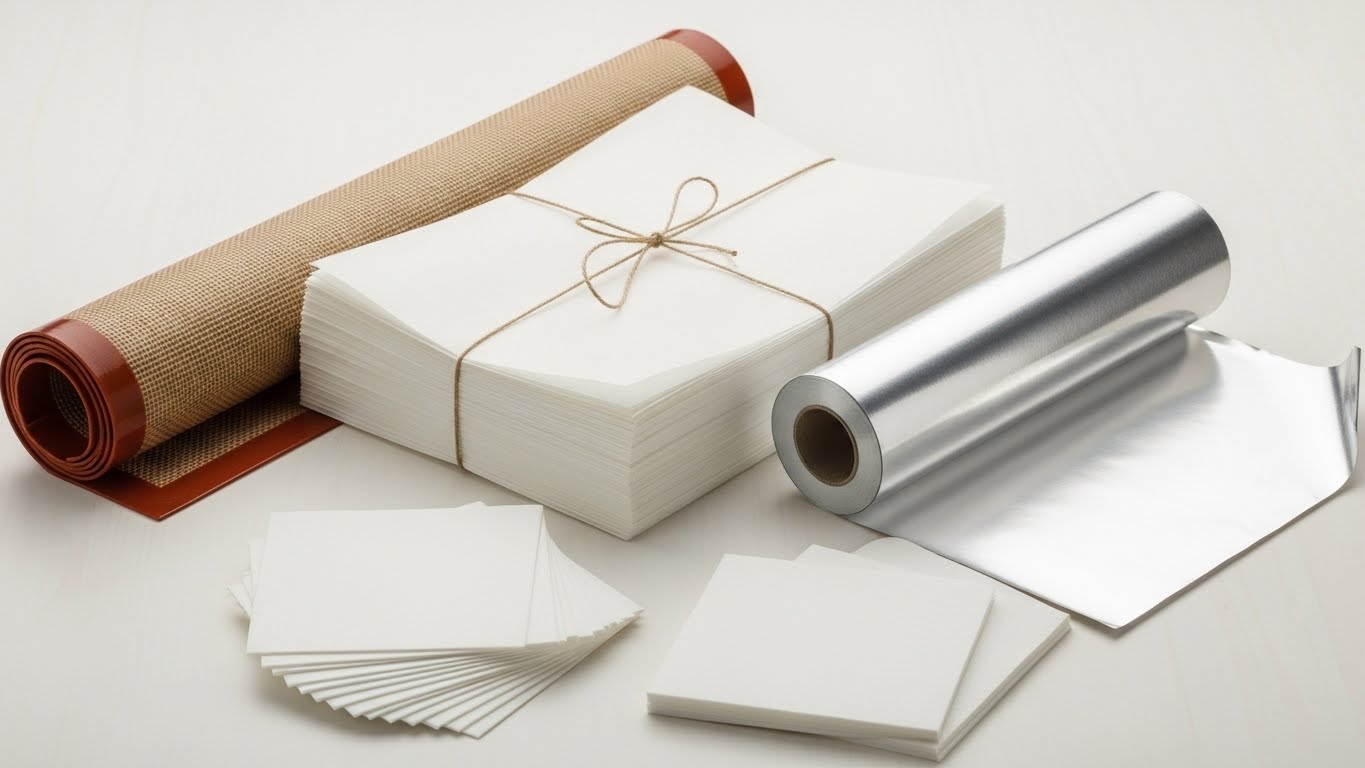
Ever found yourself ready to bake only to discover you're out of parchment paper? As a replacement for baking paper, several alternatives can save your cooking project. Parchment paper has been one of the essential tools for professional chefs and bakers for ages, and it's easy to see why. Essentially, it's paper coated with silicone, making it non-stick, heat-resistant (up to 425 degrees), and water-resistant.
Fortunately, professional kitchens rarely come to a standstill when parchment supplies run low. The best replacement for baking paper often depends on what you're making. Silicone baking mats, for instance, can last for up to 3000 baking cycles and are oven-safe up to 480°F - 500°F. However, other options like wax paper, aluminum foil, or even the old-school greasing method might actually work better for specific recipes. In this guide, I'll walk you through what professional chefs reach for when they're out of parchment paper, helping you choose the right alternative for your next culinary creation.
Wax Paper: Only for Cold or Room Temperature Uses
Wax paper often sits in kitchen drawers alongside its more heat-resistant cousin, parchment paper. While it looks similar, wax paper has distinct limitations that make it suitable only for specific cooking tasks.
What wax paper is made of
Wax paper consists of tissue paper coated with food-safe paraffin wax that's forced into the paper's pores and spread as a coating. This manufacturing technique dates back to the Middle Ages, though modern versions primarily use petroleum-derived paraffin, and it can serve as a replacement for baking paper in certain non-heat applications. Some manufacturers also produce wax paper using soybean oil or microcrystalline wax, which provides additional flexibility and resistance to cracking.
The waxy coating creates a moisture-resistant, non-stick surface that excels at keeping water in or out. This makes wax paper particularly useful for food storage – especially since it's odorless, tasteless, and non-reactive.
Why it's not safe for oven use
Despite its usefulness, wax paper should never be placed in the oven. Unlike parchment paper, wax paper lacks heat resistance. The coating begins to melt at temperatures as low as 120°F and can smoke or even catch fire at higher temperatures. This fundamental difference makes wax paper unsuitable for baking or roasting.
The sole exception, according to some manufacturers, is when wax paper is completely covered by cake batter. Nevertheless, for safety reasons, it's generally best to avoid putting wax paper in the oven altogether.
Best uses: wrapping, layering, and prep surfaces
Although wax paper can't handle heat, it excels at numerous room temperature and cold applications:
- Food preparation: Perfect for rolling out dough without sticking, sifting dry ingredients, and creating a clean surface for breading meats
- Storage solutions: Excellent for wrapping cheeses (allowing them to breathe), sandwiches, and homemade candies
- Layer separation: Ideal for preventing foods from sticking together in the refrigerator or freezer
- Microwave use: Safe for covering food in the microwave to prevent splatters (as long as it doesn't touch the sides)
Furthermore, wax paper makes cleanup significantly easier during messy cooking tasks. Simply line your work surface, complete your food prep, and discard the paper afterward.
Silicone Baking Mats: The Best Replacement for Baking Paper
Among all parchment paper alternatives, silicone baking mats reign supreme in professional kitchens. These thin, flexible sheets made from food-grade silicone offer a durable solution that outperforms disposable options in many ways.
Reusable and heat-resistant
Silicone baking mats are typically made from high-quality food-grade silicone, often reinforced with fiberglass for better heat distribution. Unlike single-use parchment paper, a quality silicone mat can last for years some manufacturers claim up to 2,000 baking cycles. This makes them considerably more cost-effective over time.
Most importantly, these mats handle extreme temperatures impressively well. Standard silicone baking mats can withstand heat up to 450°F, while some professional-grade mats remain stable between -40°F to 482°F. This remarkable temperature range makes them suitable for everything from freezer storage to high-heat roasting.
Ideal for cookies, pastries, and roasting
Silicone mats truly shine with specific types of baking projects. They're particularly effective for sticky foods like caramel work, brittle, and tuiles. Many professional chefs consider them indispensable for making macarons, ensuring even browning and preventing sticking.
For savory applications, I've found these mats produce beautifully roasted vegetables golden and crispy without excessive oil. Moreover, they're excellent for fish and tender meats that might otherwise stick to pans.
Limitations in size and flexibility
Despite their many benefits, silicone mats do have drawbacks. First, they come in predetermined sizes and cannot be cut to fit irregular pans cutting them could expose potentially harmful fiberglass reinforcement. Additionally, they require proper storage to prevent debris accumulation.
Furthermore, some baking experts note that silicone mats can affect texture in certain baked goods. Cookies may spread more than desired because the surface is almost too non-stick, potentially resulting in thinner cookies with crispier edges. Consequently, for some delicate bakes where texture is crucial, parchment paper might still be preferable.
Aluminum Foil: A Versatile but Sticky Option
Aluminum foil is likely sitting in your kitchen drawer right now, making it the most accessible replacement for baking paper when you're in a pinch. This kitchen staple can handle temperatures up to a scorching 1,220°F, yet its relationship with sticky foods is notoriously complicated.
When foil works well
Aluminum foil truly excels in high-heat applications, particularly above 400°F. Its excellent thermal conductivity makes it ideal for creating sealed packets for fish, locking in moisture and flavors. In addition, folded aluminum foil can protect delicate pie crusts or casserole toppings from over-browning.
I've found foil particularly valuable for catching drips simply place a sheet on the rack below your bubbling lasagna or fruit pie to prevent oven messes. Furthermore, it creates an effective barrier against odors when storing leftovers, plus it's malleable enough to wrap foods of any shape.
How to prevent sticking with oil
Unlike parchment paper, aluminum foil requires intervention to prevent sticking. The simplest method is applying oil or cooking spray before placing food on the foil. For even better results, you can use specialized non-stick aluminum foil, which resists sticking without added grease.
A clever trick many professional chefs employ involves gently crinkling the foil before spreading it on your baking sheet. These small divots create air pockets that minimize contact between food and foil, making it easier to remove delicate items with a spatula.
If you're working with particularly sticky foods like cookies or roasted vegetables, consider doubling down: use both the crinkling technique and a light application of oil.
Why it's not always ideal for delicate bakes
Regardless of these techniques, aluminum foil presents challenges for certain recipes. Its high conductivity can lead to excessive browning or even burning on the bottom of baked goods. In a cookie comparison test, those baked on foil developed darker, crispier edges compared to those on parchment paper.
Even more troubling, acidic foods like lemon-flavored cookies or tomato-based dishes can react with aluminum, potentially creating a metallic taste. Additionally, foil tears easily compared to other alternatives.
For delicate baking where texture matters greatly, I recommend reaching for parchment paper or silicone mats instead. Save the foil for high-heat roasting, packet cooking, or when you need a sturdy barrier for your messiest recipes.
Greasing and Flour: The Old-School Method That Still Works
Long before specialized baking products existed, home cooks and professional bakers relied on a simple yet effective technique: greasing and flouring their pans. This traditional method remains a trustworthy replacement for baking paper even in today's professional kitchens.
How to grease and flour a pan properly
The process begins with thoroughly cleaning and drying your pan. Next, apply a thin layer of fat butter, shortening, or cooking spray all work effectively. For best results, use a high-quality solid vegetable shortening applied with a folded paper towel or a dedicated 2-inch pastry brush. Some professionals even use a brand-new paintbrush specifically designated for this purpose.
After greasing, sprinkle about a teaspoonful of flour into the pan. Hold the pan parallel to your counter and gently shake it to distribute flour across the bottom. For the sides, tilt the pan and tap it with your palm (as if playing a tambourine), rotating until all surfaces are coated. Finally, tap out excess flour over the sink or trash.
When this method is most effective
Greasing and flouring truly shines with specific bakes. It's practically essential for Bundt cakes, professionals meticulously grease every inch of these intricate pans and repair any bare spots they notice. This method is likewise crucial for cakes with high sugar content, as sugar caramelizes during baking and can stick stubbornly to pans.
Conversely, angel food cakes and egg-white foam batters should never be baked in greased pans, as they need surfaces to "climb" during rising.
Pros and cons compared to parchment paper
The primary advantage is accessibility you likely have these ingredients already. Additionally, proper greasing and flouring creates a thin, golden-brown crust on the sides and bottom of cakes, which many bakers prize.
The downsides? It's more labor-intensive than simply cutting parchment, plus there's greater risk of sticking if you miss spots. Furthermore, the flour coating can create a thicker, occasionally drier crust than other methods sometimes considered undesirable.
Indeed, many professional bakers now combine techniques, using parchment for bottoms while greasing and flouring sides for the best of both worlds.
Conclusion
Finding yourself without baking paper doesn't mean your baking plans must come to a halt. Throughout this guide, we've explored several alternatives that professional kitchens rely on when parchment supplies run low. Silicone baking mats stand out as the premium replacement, offering incredible durability through thousands of baking cycles along with superior non-stick properties. However, other options certainly have their place in your culinary arsenal.
Wax paper, while unsuitable for heat, excels at cold food preparation and storage. Aluminum foil handles extremely high temperatures but requires proper greasing to prevent sticking. The traditional method of greasing and flouring pans still works wonderfully, especially for intricate cake pans where parchment simply can't conform to the shape.
The best choice ultimately depends on what you're making. Delicate cookies might fare better on silicone mats, while roasted vegetables could do perfectly fine on oiled aluminum foil. High-sugar cakes almost certainly need the greasing and flouring technique for clean release.
Next time you reach for parchment paper only to find an empty box, remember that professional chefs face this same challenge. Rather than panicking, they simply reach for the most appropriate alternative based on what they're creating. Armed with the knowledge from this guide, you can now confidently do the same, ensuring your culinary projects continue without missing a beat.
 English
 French
 Spanish
 German
 Italian
 Portuguese