Practical Kitchen Alternatives That Replace Baking Paper With Confidence
Published on: 2025-12-26
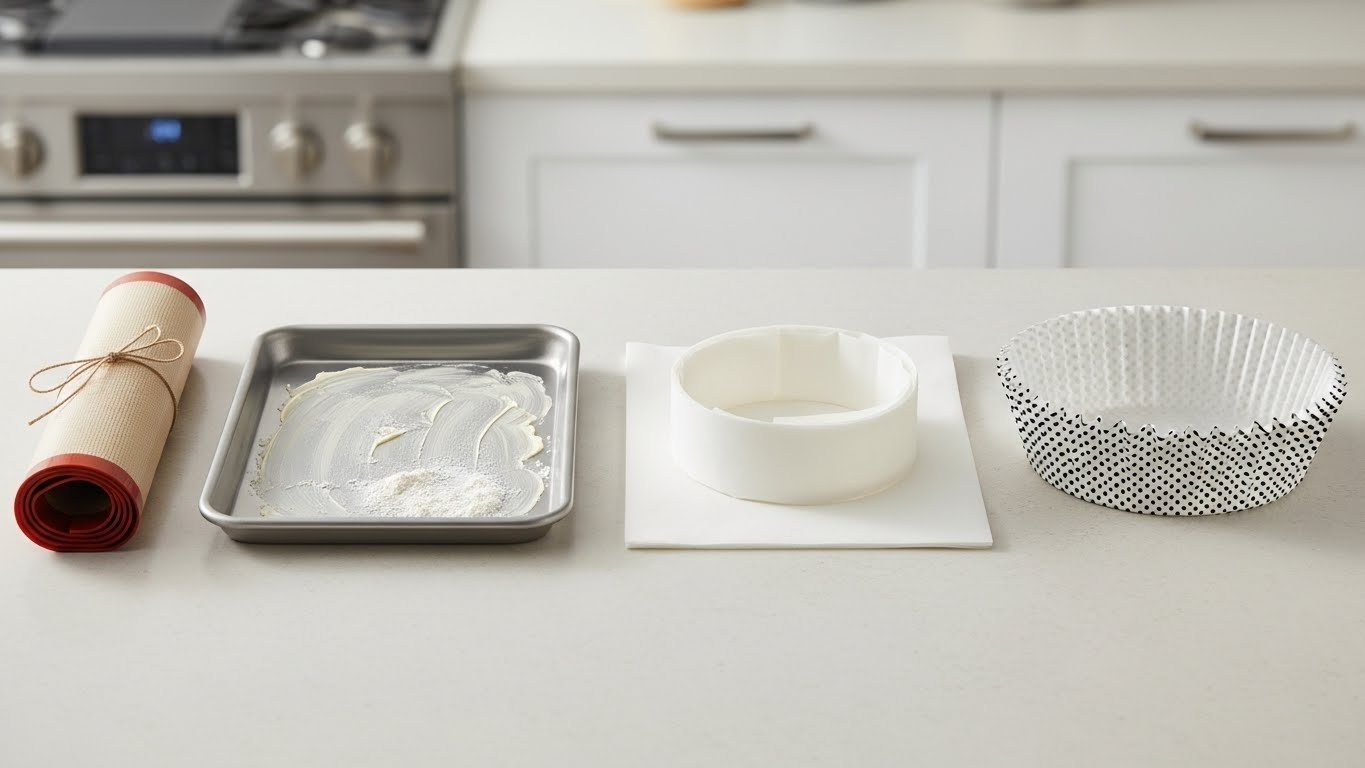
Ever found yourself needing a baking paper substitute right in the middle of preparing your favorite recipe? We certainly have been there! Parchment paper has been one of the essential tools for professional chefs and bakers for ages. However, when you're out of this kitchen staple, knowing reliable alternatives can save your baking project from disaster.
Parchment paper is basically paper coated with silicone, making it non-stick, heat-resistant, and water-resistant. In fact, it's oven-safe up to 425 degrees, providing picture-perfect baking results and easy clean-up. The primary purpose of using a baking paper substitute is to prevent food from sticking to your pans while ensuring even heat distribution during cooking.
In this guide, we'll explore practical alternatives to parchment paper that you can confidently use in your kitchen. Specifically, we'll cover options like silicone baking mats that can last for up to 3000 baking cycles, aluminum foil with oil, and other effective substitutes. Whether you're looking for single-use options or more sustainable alternatives, we've got you covered with solutions that work just as well as your trusty parchment paper.
What is baking paper and why do we use it?
Baking paper goes by many names parchment paper, bakery paper but regardless of what you call it, this kitchen essential has earned its place in homes and professional kitchens alike.
Parchment paper is essentially paper coated with food-safe silicone, giving it those slippery non-stick properties that make it invaluable for cooking and baking. The silicone coating creates a remarkably versatile kitchen tool that's stable at high temperatures and doesn't leach chemicals into food.
Common uses in baking and cooking
Beyond simply lining baking sheets, parchment paper serves numerous purposes throughout the kitchen. For bakers, it prevents cakes, cookies, and bread from sticking to pans and enables easy removal without leaving stubborn bits behind.
Additionally, parchment paper excels at lining casserole dishes for savory dishes, creating a barrier between food and cookware. Many cooks rely on it when rolling out dough to prevent sticking to counters or rolling pins.
Furthermore, this versatile paper works wonderfully for cooking "en papillote" a traditional French technique where food (typically fish or vegetables) steams within a sealed parchment packet, concentrating flavors. Some cooks even use it to line air fryer baskets, making cleanup nearly effortless.
Heat resistance and non-stick properties
A key advantage of parchment paper is its impressive heat tolerance. Most commercial parchment papers remain stable between 420°F and 450°F (216–232°C), though this varies by brand. Unbleached parchment typically withstands slightly higher temperatures than bleached versions.
The manufacturing process includes treating the paper with sulfuric acid to create a semi-permanent gelatin layer before applying silicone coating. This combination provides excellent non-stick properties without requiring additional oils or fats.
Nevertheless, despite its heat resistance, parchment should never be used under broilers, which can exceed 500°F (260°C).
Why people look for baking paper substitutes
Though incredibly useful, sometimes you need a baking paper substitute unexpectedly. People often run out mid-recipe or seek alternatives for environmental reasons since most parchment contains silicone, it cannot be recycled or composted effectively.
Moreover, some health-conscious cooks worry about potential chemicals in bleached parchment papers, although exposure levels are generally considered minimal. Cost considerations also drive the search for alternatives, particularly among frequent bakers who use substantial amounts.
Ultimately, understanding what makes parchment paper effective helps identify suitable substitutes that can replicate its essential non-stick and heat-resistant properties.
Top 4 reliable baking paper substitutes
Looking for reliable baking paper substitutes? I've tested numerous alternatives over the years and narrowed down the four most effective options that consistently deliver excellent results. Each substitute has unique advantages depending on what you're baking, so let's examine your best options!
1. Silicone baking mats (Silpat)
Silicone baking mats represent the gold standard for parchment paper alternatives. Made from food-grade silicone with a fiberglass core, these durable mats can withstand an impressive 3000 baking cycles when properly maintained. Notably, silicone mats handle temperatures ranging from -40°F up to 480°F, making them incredibly versatile for freezer-to-oven recipes. They provide a truly non-stick surface that's perfect for cookies, scones, and other potentially sticky baked goods. One limitation worth noting - you can't cut these mats to size, yet they come in various dimensions including round shapes for cake tins. Their reusable nature makes them eco-friendly compared to disposable options.
2. Aluminum foil with oil
Aluminum foil serves as a practical substitute, especially when you need to lift heavy items from the pan. Consequently, it's ideal for cooking bacon, toasting nuts, or creating parchment-style packets (en papillote). Unlike parchment paper, foil lacks the silicone coating that prevents sticking, so applying oil or butter is essential. A pastry brush works best for even application. Remember that foil's reflective surface affects cooking time and tends to create darker, crispier edges on baked goods. This quality can be either an advantage or disadvantage depending on your preference.
3. Greased baking sheets
The classic butter-and-flour method remains effective and accessible when you're in a pinch. This approach involves thoroughly coating your pan with solid fat like butter or coconut oil (liquid oils aren't recommended), then dusting with flour. Subsequently, rotate the pan in all directions to ensure complete coverage before tapping out excess flour. This technique works remarkably well provided you cover every surface. The primary drawback involves the flour coating on your baked goods, which might affect appearance. Additionally, high-temperature baking risks burning the flour.
4. Nonstick sheet pans
High-quality nonstick baking sheets offer convenience without additional materials. These pans typically handle temperatures between 400°F and 500°F depending on the specific product. The Nordic Ware Naturals Nonstick Half Sheet Pan, for instance, features a premium gold nonstick interior for effortless food release and remains oven-safe up to 400°F. The main consideration with nonstick pans involves their lifespan - you'll likely need replacement every couple of years as the coating wears off.
When to use each substitute with confidence
Choosing the right baking paper substitute depends entirely on what you're cooking. Each alternative excels in specific scenarios, and knowing which to use can make all the difference in your final results.
Best for cookies and pastries
Silicone baking mats reign supreme for cookies and delicate pastries. These mats distribute heat evenly and provide a consistently non-stick surface, preventing thin cookies from burning on the edges. If you bake frequently, silicone mats can save you money and reduce waste. Alternatively, high-quality nonstick sheet pans work well for cookies, yet expect slightly darker bottoms than with parchment paper.
Best for roasting vegetables or meats
For roasting vegetables or meats, aluminum foil shines because of its ability to withstand high temperatures up to 1,220°F. The reflective surface actually helps create more caramelization and flavor for vegetables. Meanwhile, a well-greased baking sheet offers another reliable option, albeit requiring more thorough cleaning afterward.
Best for sticky or delicate items
Silicone mats (Silpat) provide the ultimate non-stick surface for sticky items like candies or delicate pastries. Remarkably, these mats can handle from -40°F to 480-500°F. A thoroughly greased and floured pan serves as a decent alternative, yet ensure complete coverage to prevent any sticking.
Best for high-heat baking
When baking at temperatures above 425°F, aluminum foil becomes your ally, as long as it's properly greased first. Remember that foods on foil tend to cook faster, meaning closer monitoring is necessary. Nonstick sheet pans typically handle between 400°F and 500°F depending on the brand, making them suitable for most high-temperature recipes.
What not to use as a baking paper substitute
While exploring alternatives, knowing what not to use as a baking paper substitute is equally important for safety reasons. Unfortunately, some common materials can create serious hazards in your kitchen.
Why wax paper is unsafe for oven use
First and foremost, wax paper should never enter your oven. Unlike parchment paper, wax paper has a coating that melts at approximately 120°F – far below standard baking temperatures (350°F-450°F). This melting wax can contaminate your food with chemicals. Even more concerning, wax paper can smoke and potentially catch fire at high temperatures, creating dangerous oven conditions.
Dangers of using paper grocery bags
Paper grocery bags might seem like a natural substitute, yet they pose significant risks. These bags were never designed for cooking and contain glues, inks, and chemicals used in recycling processes. Some may even harbor tiny metal shavings. Indeed, recent research found that many paper bags contain PFAS or "forever chemicals" that can migrate into food, potentially harming human health.
Avoiding plastic wraps and freezer paper
Freezer paper contains a polyethylene coating that should never be heated as it could break down and leach into food. Likewise, plastic wrap should never be used above 212°F and must never enter conventional ovens, toaster ovens, or grills. Even in microwaves, plastic wrap requires special handling to prevent melting onto food.
Conclusion
Finding yourself without baking paper doesn't mean your kitchen projects need to come to a halt. Throughout this article, we've explored several reliable alternatives that can confidently replace this kitchen staple. Silicone baking mats stand out as the most sustainable option, lasting through thousands of baking cycles while providing excellent non-stick properties. Aluminum foil with oil offers versatility for lifting heavy items and creating packets, though it requires proper greasing. The classic butter-and-flour method remains effective in a pinch, and quality non-stick pans eliminate the need for additional materials altogether.
Certainly, each substitute works best in specific situations. Silicone mats excel with cookies and delicate pastries, while aluminum foil shines when roasting vegetables and meats at high temperatures. For sticky items like candies or caramels, silicone mats or thoroughly greased pans deliver the best results.
Safety concerns must also guide your choices. Wax paper, paper grocery bags, plastic wraps, and freezer paper should never substitute for baking paper in the oven due to serious health and fire hazards.
We hope these practical alternatives help you navigate unexpected kitchen situations with confidence. Next time you reach for baking paper only to find an empty box, you'll know exactly which substitute will work best for your specific cooking needs. After all, a well-prepared home cook always has backup plans ready for those common kitchen emergencies!
 English
 French
 Spanish
 German
 Italian
 Portuguese